

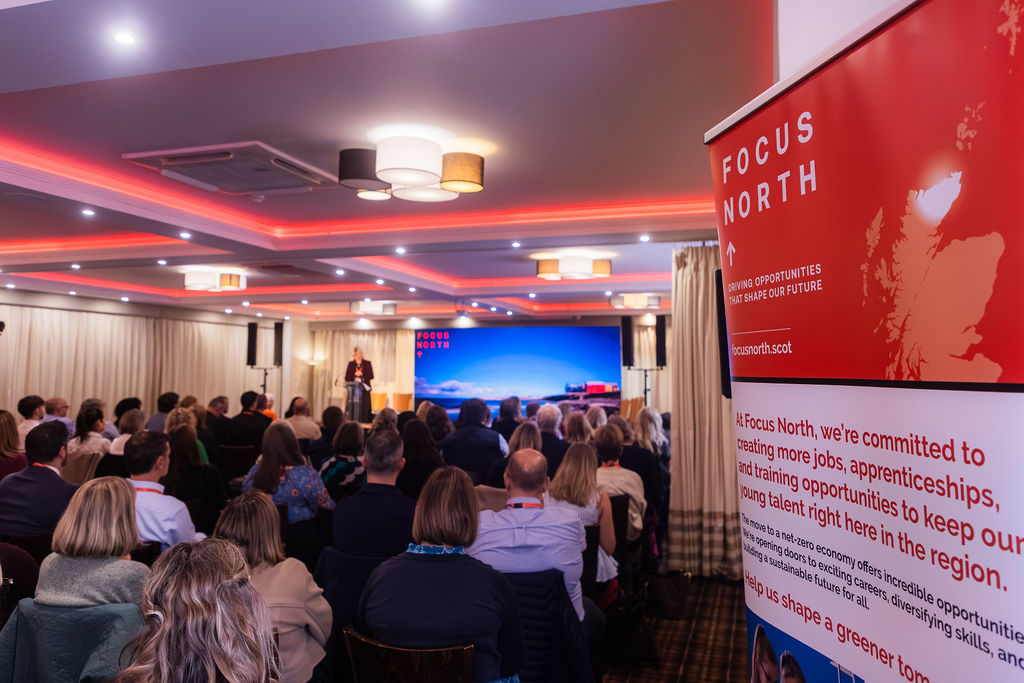
Focus North Conference has wrapped for another year. Across one packed day, we brought businesses, developers, public organisations, educators and community groups together in Wick around one shared topic: Changing Perceptions. There was a lot to digest, but here are eight messages to take away.
1. The future we talked about is starting to happen
A year ago, many of the region’s biggest opportunities were still largely talked about in terms of potential. That picture is changing. Projects are securing planning permission, construction is beginning and investment is moving from proposals and pipelines towards delivery.
As Focus North programme manager Peter Faccenda put it: “the future we anticipated is becoming reality.”
That brings opportunity, but it also brings a much greater urgency to prepare for it. In his welcome address, Peter highlighted the concrete actions that need to happen at a collaborative level to ensure our region is ready to meet the future head-on. This includes investment in housing, skills, recruitment, transport and infrastructure – themes that came up repeatedly throughout the day.
Peter’s challenge to organisations was simple: we cannot simply be consumers of growth and expect somebody else to solve those problems. Businesses and organisations need to think now about the skills they require, the people they need to attract and the part they can play in increasing capacity across the region.
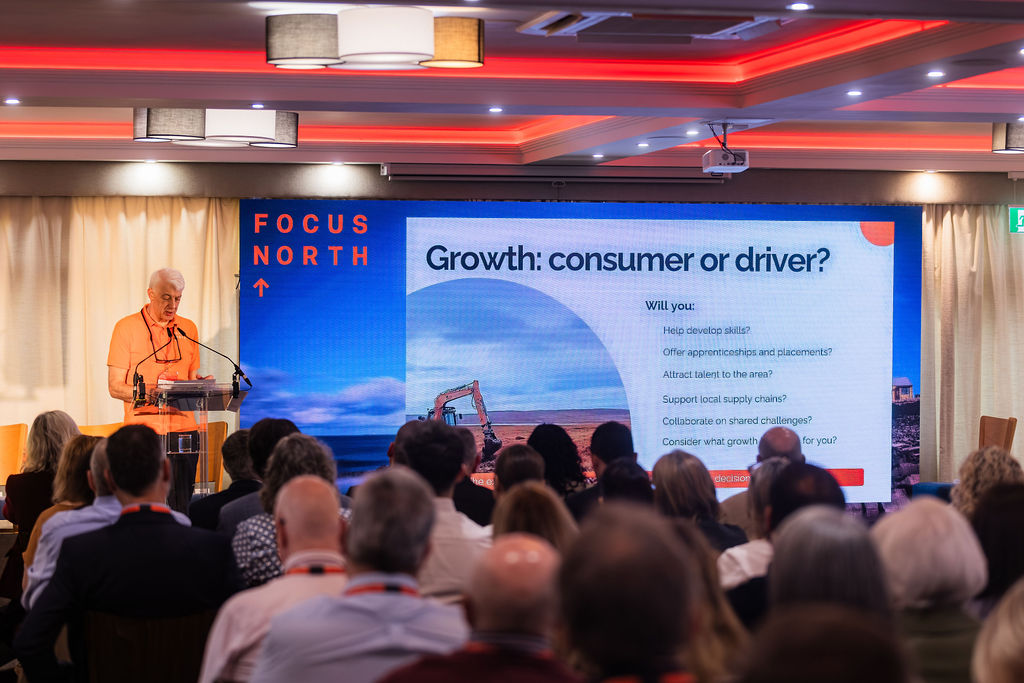
Above: Programme manager Peter Faccenda asks delegates how they will contribute to the economic transformation of the North Highlands.
2. We have more capability than people realise
One of the strongest messages from the developers panel was just how different perceptions of the North Highlands can be from the reality.
Murphy Operations Manager Mark Williams spoke about arriving in the region with many of the familiar assumptions about remoteness, then discovering the depth of local expertise, resilience and supply chain capability – alongside a level of connectivity between organisations he had not experienced elsewhere in Scotland.
The North Highlands is not starting from scratch. Decades of experience in nuclear, engineering, fabrication, environmental science, construction and logistics have created a formidable base from which new industries can grow.
3. The real test is how much value stays here
Much of the coverage surrounding major developments focuses on the challenges they create: pressure on housing, infrastructure and an already tight labour market.
Those challenges are real, but they’re not the full story. The more important question is what we do with the opportunity.
HIE Area Manager Claire Wilson argued that success should not be measured simply in headline investment figures, but in what that investment enables and how much benefit can be retained locally. Can it deliver stronger businesses, skilled careers, better connectivity and more resilient communities?
Claire outlined HIE’s role in making that happen: de-risking strategic investments and taking a lead on ambitious new sectors such as the space opportunity at A’Mhoine.
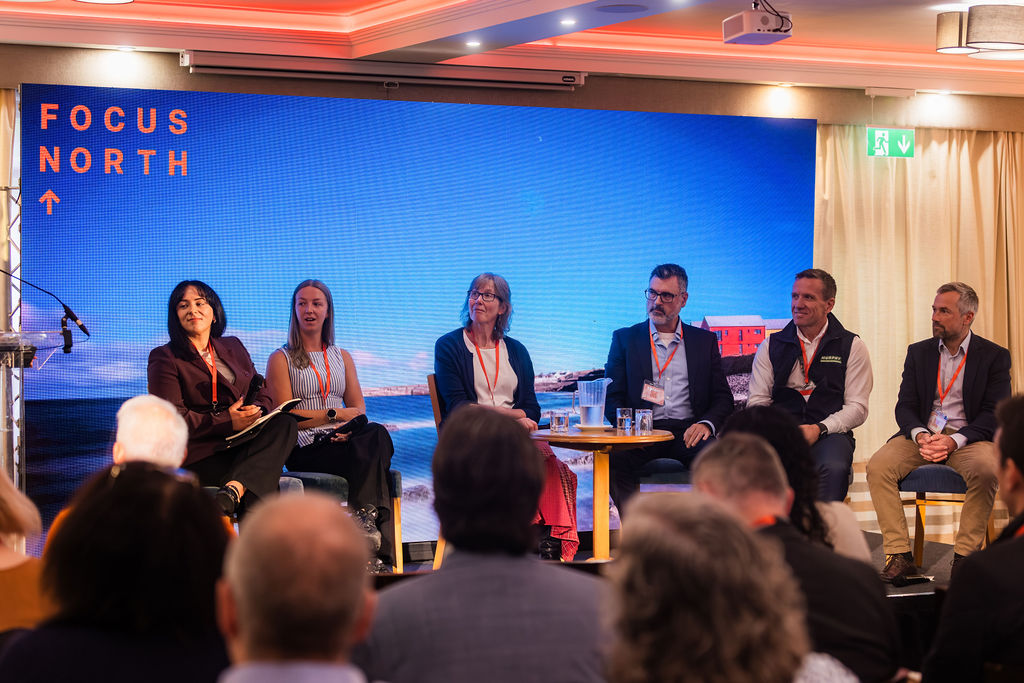
Above: Panellists from HIE, NRS Dounreay, Flow Country Partnership, Pentland Offshore Wind and Murphy discuss the region’s growth sectors, including space, environmental science and offshore wind.
4. Our biggest constraint may be people
NRS Dounreay’s Magnus Davidson put some striking numbers around the scale of the opportunity in North Highland.
By the mid-2030s, Dounreay modelling suggests the energy sector alone could create demand for around 850 temporary and 800 permanent roles accessible to the Caithness and north Sutherland labour market.
Meeting that demand requires a major operation in talent attraction, including growing our own, retaining more young people locally and bringing new people into the region. Live North – North Highland Chamber of Commerce’s recruitment initative – is just one of the ways we are collectively making that happen. Leveraging apprenticeship funding and upskilling local suppliers to enable growth is another.
Alongside that, we need more housing, improved transport connectivity and strengthened local services.
6. Infrastructure is an enabler, not an end in itself
Ports. Aviation. Grid infrastructure. Education. Public transport. Housing.
The infrastructure panel covered a lot of ground, but one idea connected almost all of it: infrastructure only matters because of what it makes possible.
The new dual-route PSO does more than provide flights to Glasgow and Aberdeen; it supports business, inward investment and social connectivity. The proposed Thurso Lifelong Learning and Innovation District is about much more than constructing new buildings; it is about creating pathways through school, further and higher education, research and employment.
Infrastructure should not simply replace what existed before.
The question should be: what do we need to build the economy we want next?

Above: The ‘Infrastructure for Growth’ panel discussion shared updates on transport and digital connectivity, port expansion plans and the wide range of educational opportunities on our doorstep – highlighting the improvements that support a growing economy.
6. The scale of investment is enormous – and some of it is happening now
Perhaps the biggest number of the day came from SSEN Transmission.
Its Pathway to 2030 programme represents around £29 billion of investment across the north of Scotland, with more than £12 billion expected in the Highlands and more than £2 billion projected to reach the Highland supply chain.
Crucially, this is not all somewhere over the horizon. Construction has started, contracts are being placed and money is already moving through the economy.
For local businesses, the message was clear: there is a major opportunity ahead, but businesses need visibility of those opportunities and routes into increasingly complex supply chains.
7. We need to get much better at telling our own story
This was the theme behind Changing Perceptions, and behind Quietly World Class, the Focus North film which premiered at the conference.
Filmed by Local Lens Media and directed by Rebel Creative, the film showcases the world-class work many of us are not even aware is happening. Through a whistlestop tour of engineering, manufacturing, research labs and hospitality we uncovered the organisations who are driving innovation at a national and even international scale.
Yet the old narrative of a remote, fragile economy remains remarkably persistent. As one speaker put it, people are often “pleasantly surprised” when they actually come here.
If the reality is stronger than the perception, we need to be much louder about the reality.
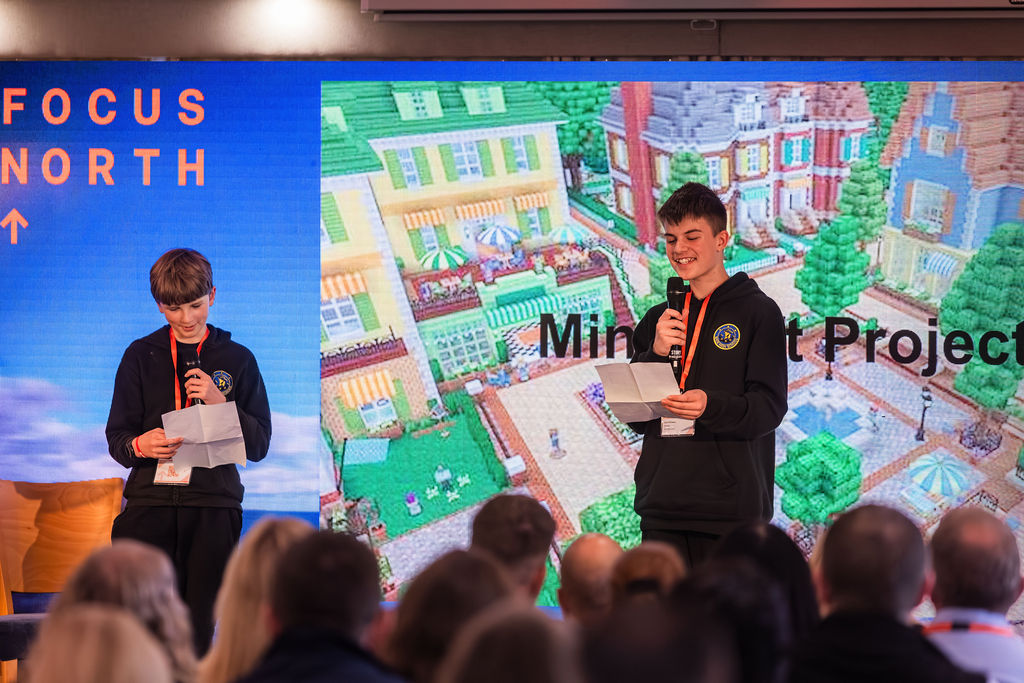
Above: Pupils from Wick High School shared their Minecraft: Reinventing Regions project, which challenged S1 students to design and build their ideal community using Minecraft tools.
8. Young people need to see themselves in this future
The afternoon programme explored work experience, education, skills development and new ways of engaging young people.
Together, those sessions reinforced perhaps the most important perception of all: if young people grow up believing that success means leaving the North Highlands, many will do exactly that.
The opportunity now is to show them something different: meaningful careers, progression, innovation and a chance to build a life here. That does not mean persuading every young person to stay. It means ensuring that staying – or leaving and returning – feels like a genuine, ambitious choice.
We achieve that by getting into schools at an early stage to challenge misconceptions and highlight opportunities. Developing the Young Workforce North Highland has co-ordinators in each of our region’s high schools, working directly with young people on their employability skills and career pathways. In their session, Powering Futures explained how linking education with industry yields powerful results. Likewise, Highland Council outlined the value of work experience placements. And in a particular highlight for the day, local pupils presented their very own vision for the region, built in Minecraft as part of our Reinventing Regions project.
Looking forward
Wick Harbour Trust chair Bob Silverwood offered perhaps the simplest image of the day. When we picture Wick Harbour, he said, we often picture the famous old black-and-white photographs of the herring era. Instead, he encouraged the audience to picture it in colour: fishing boats alongside offshore wind activity, leisure, new infrastructure and new industries.
It was a fitting metaphor for the wider North Highlands. Our region cannot be defined only by what it once was.
The opportunity now is to see – and shape – what comes next.